
Kylian Mbappé Early Life & Childhood: Family, Bondy and His Football Beginnings
Introduction
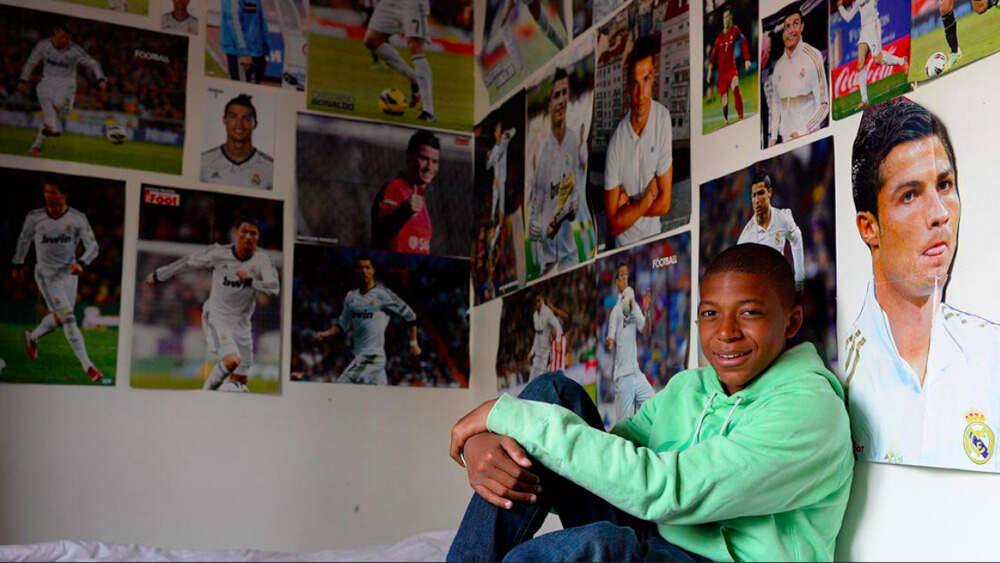
Long before Kylian Mbappé became a World Cup winner and Real Madrid star, he was a talented boy growing up in Bondy, a suburb northeast of Paris.
His childhood was shaped by football, family and a sporting environment that encouraged ambition while keeping him grounded. His father, Wilfried Mbappé, was involved in football coaching, while his mother, Fayza Lamari, had a successful career in handball.
Those influences gave Mbappé an unusually strong sporting foundation from an early age. But talent alone did not explain his rapid rise. His first coaches also noticed his competitive personality, confidence and desire to improve.
This is the story of Mbappé's formative years—from his family background and childhood in Bondy to his first football club and the early steps that eventually led him toward the French elite.
For the broader story of his career, see Kylian Mbappé: Biography, Career, Records and Rise to Football Stardom.
Growing Up in Bondy
Kylian Sanmi Mbappé Lottin was born on December 20, 1998, in Paris, France.
Although he was born in the French capital, Bondy became the place most closely associated with his childhood.
Located in the Seine-Saint-Denis department northeast of central Paris, Bondy is a diverse community with a strong football culture. For Mbappé, local football pitches became an important part of everyday life.
He grew up surrounded by children who shared the same passion for football. Competitive games were common, and playing against older or physically stronger opponents helped him develop confidence from a young age.
Bondy would eventually become an important part of Mbappé's identity. Even after reaching the highest levels of football, he continued to speak proudly about the community where his journey began.
A Family Built Around Sport
Mbappé's childhood was heavily influenced by his parents and their sporting backgrounds.
His father, Wilfried Mbappé, worked as a football coach and was closely involved with AS Bondy's youth setup.
His mother, Fayza Lamari, was a professional handball player who represented France at a high level.
Growing up with two parents who understood competitive sport gave Mbappé an environment very different from that of many young footballers.
Training, discipline and competition were familiar concepts inside the family.
At the same time, his parents understood that developing a young athlete required more than simply pushing him toward professional football.
They helped him understand the importance of discipline, responsibility and making the most of his opportunities.
Football Became His Passion Early
Mbappé showed a strong interest in football from childhood.
While many children enjoyed football as a game, he quickly developed a more competitive attitude. He wanted to win, improve and test himself against better players.
His natural physical qualities were already noticeable.
He possessed:
- Exceptional acceleration
- Excellent balance
- Close control at speed
- Quick changes of direction
- Strong finishing instincts
- Confidence in one-on-one situations
However, speed was only one part of his early development.
His ability to understand where to move and when to attack space was also apparent at a young age. Those qualities would later become central to his playing style as an elite forward.
Starting at AS Bondy
Mbappé's first major football environment was AS Bondy, the local club where his father was involved in coaching.
The club played an important role in the earliest stage of his football education.
Rather than immediately entering one of France's biggest academies, Mbappé developed in a local environment where he could play regularly and compete against other young players.
His performances quickly attracted attention.
Coaches could see that he possessed qualities that separated him from most players his age. His acceleration made him difficult to contain, while his technical ability allowed him to create chances for himself and his teammates.
More importantly, he was not afraid to take responsibility.
When the game became difficult, he wanted the ball.
Playing Against Older Players
One of the most important parts of Mbappé's early development was his exposure to older players.
Because of his ability, he was frequently able to compete above his age group.
Playing against physically stronger opponents forced him to make decisions more quickly.
He could not rely solely on speed. He had to learn how to:
- Protect the ball
- Find space before receiving
- Anticipate defenders
- Change direction quickly
- Finish under pressure
- Use his acceleration at the right moment
These experiences helped turn his natural athletic ability into a more complete football skill set.
The lessons would become particularly valuable when he eventually moved into professional football.
The Influence of His Father
Wilfried Mbappé played an important role during his son's early football years.
As a coach, he understood the demands of developing young players and was able to provide Mbappé with an early football education.
But being both a father and a football coach also required balance.
Mbappé's development was not simply about scoring as many goals as possible. He needed to learn the fundamentals of the game, understand teamwork and develop the discipline required for competitive football.
His father's experience helped him navigate those early years.
The football environment around AS Bondy also gave Mbappé an opportunity to develop without immediately being surrounded by the intense spotlight that would follow him later.
His Mother's Sporting Influence
Fayza Lamari brought a different perspective to Mbappé's upbringing.
As a former professional handball player, she understood the physical and mental demands of elite sport.
Her sporting background meant that competition was already familiar within the family.
She could also understand the importance of handling pressure, maintaining discipline and protecting a young athlete's long-term development.
Together, his parents created a sporting environment in which ambition was encouraged but expectations remained high.
This combination became an important part of Mbappé's personality as he moved toward professional football.
More Than Just a Fast Young Player
Even as a child, Mbappé's potential went beyond his pace.
His ability to accelerate past defenders was obvious, but coaches also noticed his technical confidence and attacking instincts.
He enjoyed receiving the ball in dangerous areas and taking defenders on.
His willingness to attempt difficult actions was another defining characteristic.
Rather than playing cautiously, Mbappé often looked for ways to influence the game.
That mentality would later become one of the defining features of his career.
The First Signs of Elite Potential
As Mbappé progressed through youth football, his reputation began to spread beyond Bondy.
Scouts from larger clubs started paying attention to him.
His performances suggested that he had the potential to progress into elite academy football, but the next stage required a different level of training and competition.
For a young player, this was an important transition.
The question was no longer whether Mbappé was talented.
It was whether he could turn that talent into a sustainable professional career.
Interest From Major Clubs
Mbappé's performances eventually attracted interest from some of Europe's biggest clubs.
His talent was difficult to overlook, particularly because he combined technical ability with extraordinary athletic qualities.
Clubs recognized that he was not simply a promising youth player. He had the potential to become a high-level professional.
Among the clubs that monitored his development was Real Madrid, where he would eventually fulfill a childhood ambition years later.
However, the path forward was not simply about joining the most famous club available.
The development environment mattered.
Choosing the Right Development Path
For Mbappé and his family, the priority was finding an environment where he could continue developing.
He needed high-level coaching, stronger competition and a pathway toward senior football.
That approach eventually led him toward the French national development system and then AS Monaco.
His Monaco journey is covered separately in Kylian Mbappé AS Monaco Career: Academy, Debut and Breakthrough.
The decision was significant because Monaco had a strong reputation for developing young players and giving them opportunities at senior level.
From Bondy to Clairefontaine
Before becoming a Monaco player, Mbappé spent time at INF Clairefontaine, France's renowned national football academy.
Clairefontaine exposed him to a much more structured elite development environment.
He trained alongside some of the country's most promising young players and experienced coaching designed to prepare footballers for the professional game.
The experience helped refine areas of his game that had begun developing naturally at AS Bondy.
He was learning not only how to attack but also how to understand the tactical and physical demands of elite football.
Learning to Play the Game at a Higher Level
At Clairefontaine, Mbappé's football education became more sophisticated.
Training emphasized technical execution, tactical awareness and decision-making.
For a player whose natural weapons included speed and dribbling, this was especially important.
The challenge was learning when to accelerate and when to slow the game down.
Instead of simply running beyond defenders, he began to understand how movement could create space before the ball even arrived.
That development would later help him become much more than a traditional winger.
Why Bondy Remained Important
Despite moving into increasingly elite football environments, Bondy remained central to Mbappé's story.
It was where he first learned to compete.
It was where local coaches first recognized his potential.
And it was where his family helped establish the foundations of his sporting career.
His journey is therefore not simply a story about academies and professional clubs.
It is also a story about how a young player developed in a local football community before eventually reaching the biggest stages in world football.
The Mentality Behind the Talent
One of the most interesting aspects of Mbappé's childhood was his confidence.
He did not appear intimidated by older players or bigger challenges.
Instead, he seemed to view difficult situations as opportunities to prove himself.
That mentality became increasingly important as his career accelerated.
At Monaco, he would face professional defenders.
At PSG, he would play alongside global superstars.
With France, he would compete at the World Cup.
Eventually, he would join Real Madrid and face the expectations that come with wearing one of football's most famous shirts.
The foundations for handling that pressure were laid much earlier in Bondy.
From Local Pitches to Professional Football
Mbappé's early years followed a clear progression:
| Stage | Development |
|---|---|
| Bondy | First football experiences and local competition |
| AS Bondy | Structured youth football and early coaching |
| Clairefontaine | Elite national-level development |
| Monaco Academy | Professional club environment |
| Monaco First Team | Breakthrough into senior football |
Each stage added something different.
Bondy gave him his football identity.
AS Bondy gave him his first serious competitive foundation.
Clairefontaine introduced him to elite development.
Monaco ultimately gave him the opportunity to prove himself in professional football.
What Made Mbappé Different as a Child?
It is easy to look back at Mbappé's childhood through the lens of his later success.
But his development was not based on one extraordinary quality.
Instead, several characteristics came together:
- Natural speed
- Technical confidence
- Competitive mentality
- Strong sporting family
- Willingness to train
- Ability to handle older opponents
- Intelligent attacking movement
- Ambition to reach the highest level
The combination made him an unusually complete prospect.
His later achievements would confirm just how accurate those early assessments were.
From Childhood Prospect to Global Superstar
The years in Bondy were only the beginning.
Mbappé would soon move through Monaco's academy, make his professional debut as a teenager and establish himself as one of Europe's most exciting young attackers.
From there, his career accelerated rapidly.
He became a Ligue 1 champion with Monaco, joined Paris Saint-Germain, won the World Cup with France and eventually moved to Real Madrid.
For a detailed look at the next stage of his rise, see Kylian Mbappé Paris Saint-Germain Career: Goals, Assists, Trophies and Records
His early life, however, explains where that journey started.
Kylian Mbappé Early Life Timeline
| Year | Milestone |
|---|---|
| 1998 | Born in Paris, France |
| Childhood | Grew up in Bondy |
| Early years | Began playing football at AS Bondy |
| Youth career | Progressed through elite French youth football |
| Teenage years | Joined INF Clairefontaine |
| 2013 | Joined AS Monaco's academy |
| 2015 | Made his professional debut for Monaco |
Frequently Asked Questions
Where did Kylian Mbappé grow up?
Mbappé grew up primarily in Bondy, a suburb northeast of Paris. The local community and AS Bondy football club played an important role in his early development.
Who are Kylian Mbappé's parents?
His father, Wilfried Mbappé, was involved in football coaching, while his mother, Fayza Lamari, was a professional handball player.
What was Mbappé's first football club?
Mbappé began playing organized football at AS Bondy, the local club where his father was involved in coaching.
Did Mbappé attend Clairefontaine?
Yes. Mbappé spent time at INF Clairefontaine, France's prestigious national football academy, during his youth development.
When did Mbappé join Monaco?
Mbappé joined AS Monaco's academy in 2013, beginning the next major stage of his development toward professional football.
Was Mbappé always a striker?
No. During his youth and early professional years, he often played from wide attacking positions. As his career developed, he increasingly operated as a central forward while retaining the pace and dribbling ability associated with his earlier role.
What made Mbappé special as a young player?
His combination of acceleration, technical ability, attacking movement and confidence made him stand out. His competitive mentality and willingness to challenge older players also helped accelerate his development.
Final Thoughts
Kylian Mbappé's rise did not begin at the Parc des Princes or the Santiago Bernabéu.
It began in Bondy.
Playing football at AS Bondy, growing up in a sporting family and progressing through France's youth development system gave him the foundations for an extraordinary career.
His childhood did not guarantee that he would become a superstar. But it gave him the environment, experience and mentality needed to take advantage of his natural talent.
From the local pitches of Bondy to the biggest stadiums in world football, Mbappé's journey shows how elite careers are often built long before the world begins watching.